Page Content
Shelley Svidal, ATA News
"High-stakes testing always narrows the curriculum."
That was one of the key messages David Berliner conveyed to the 170 participants at "Accountability for Real Learning First—Engaging Our Communities," the Alberta Teachers’ Association’s Joint Curriculum/Political Engagement Seminar. The Regents professor of education at Arizona State University was one of three, high-profile speakers at the February 27–28 seminar in Edmonton. The other speakers were Pasi Sahlberg and Joe Brewer.
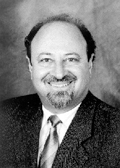 Berliner pointed out that out-of-school factors, such as social class, exert a huge influence on standardized test scores. For example, while the United States traditionally ranks poorly on international tests, its scores on the 2007 Trends in International Mathematics and Science Study for schools in which less than 10 per cent of students receive free or subsidized lunch were exceeded by only two of 58 nations.
He also pointed out that, over the last few decades, the achievement gap has replaced equal educational opportunity as the phrase of choice in the U.S. Between 1981 and 1990, for example, four articles in the New York Times included the achievement gap while 86 articles included equal educational opportunity. Between 2001 and 2006, however, the achievement gap appeared in 217 articles while equal educational opportunity appeared in only 12.
Describing the phenomenon as "the great switcheroo," Berliner observed that, while equal educational opportunity focuses on inputs, the achievement gap focuses on outputs. While it is expensive to address equal educational opportunity, the achievement gap allows politicians to lay blame. "As we cave in to some of the accountability pressures, we’re also caving in to the belief that we can fix anything—and we can’t," he said.
By not addressing equal educational opportunity, the U.S. has segregated its schools and, by extension, its society, Berliner suggested. He observed that all but Caucasian students attend schools in which a majority of students are poor. Poor students do not have much social capital, and their families are more likely to receive food stamps and less likely to have medical insurance. "We’ve become a Third World nation," he said. "It’s very embarrassing."
He noted that, while politicians want teachers to be accountable for the achievement gap, students spend less than 20 per cent of their waking hours in school. The rest of those hours they spend with their families and neighbourhoods. Unless students are physically, mentally and sociologically healthy, real learning cannot take place.
High-stakes testing, which highlights the achievement gap, has exacerbated the problem, Berliner said. By focusing on material that is on the test, teachers narrow the curriculum and facilitate the increasing domination of the servile arts. "The curriculum balance which was always imbalance is getting worse," he said, suggesting that the imbalance has created an apartheid system of education.
Pointing out that the problems that plague the United States will plague Canada as the recession takes hold, Berliner urged participants to resist accountability because it is simply not working. While the classroom time devoted to language arts and mathematics has risen in the U.S., that time is being used to do the wrong thing. For example, teachers tend not to stress reading that is critical and emancipatory when preparing their students for tests. Instead, reading and math lessons are designed so that test scores will rise and politicians will be happy. Politicians think the American education system is working when the National Assessment of Educational Progress says otherwise, he said.
Increased classroom time for language arts and mathematics has come at the expense of social studies, science, art, music, physical education and recess. Even lunch has been shortened. "This always happens when your accountability system is high stakes," he said.
Berliner concluded by suggesting that the liberal arts, not the servile ones, will generate economic growth in the 21st century, and the liberal arts are much more prevalent in rich schools than in poor ones. That a sizable percentage of the population is not being exposed to the liberal arts worsens the prospects for social cohesion and civility.
For more information about Real Learning First, please visit www.reallearningfirst.ca.
In the News