Page Content
J-C Couture
The Alberta government’s decision to proceed with a watered-down version of Grade Level of Achievement Reporting (GLAR) fails to address the fundamental flaws in the education ministry’s policy development related to student assessment and reporting.
On November 27, an information bulletin from Keray Henke, Alberta’s deputy minister of education, indicated that all public, separate and francophone authority and charter schools with Grades 1–9 will report GLA to Alberta Education "at, above or below enrolled grade" in English language arts, mathematics and, where applicable, French language arts for the 2007/08 school year. Reporting GLA in social studies and science to the ministry will remain a focus for further study.
Launched in 2004, GLAR initially involved the requirement that by 2007/08, teachers and school jurisdictions assign and report to parents a whole-number grade in the four core subjects in Grades 1–9. Many education partners pointed to flaws in this superfluous data-gathering scheme, saying that by focusing on the reporting and uploading of a single number to Alberta Education’s databases, GLAR would not improve teaching, learning or the quality of information provided to parents.
The government’s announcement also includes the mystifying claim that GLAR "ensures that students and parents understand the distinction between ‘grade’ as an enrolment designation and ‘grade’ as a level of achievement." This claim flies in the face of research on effective assessment and evaluation practice. In fact, Dr. David Berliner (see biographical note), a pre-eminent scholar in educational accountability and author of more than 150 books and articles, calls GLAR "nonsense." Berliner sees the potential for teachers and schools to be set up for ranking and comparisons by organizations such as the Fraser Institute. "What additional information does the public get about its schools, compared to other information that is readily available in Alberta?" Berliner asks.
After a thorough review of the inhouse-produced technical papers used by the government to justify GLAR, Berliner agrees with what Alberta educators have said all along: "A crude single number that will capture the performance of most of the students in a class, say a single ‘4’ for most of the fourth graders, will likely yield nothing of great informational value for use by parents or the business community." In reviewing similar bureaucratic surveillance schemes elsewhere, Berliner predicts that "GLA will, over time, be seen as expensive and burdensome, duplicative of other information, and will become more and more invalid as time goes by. I expect that it will end up being judged a thoroughly unsuccessful system of evaluation."
The government claims that the decision to proceed with GLA was made following consultations with education partners, "most of whom have indicated support for reporting GLA to Alberta Education if reported as ‘at, above or below’ enrolled grade level." What the announcement fails to acknowledge is that along with other partners, such as the College of Alberta School Superintendents, the Association has called upon the ministry to consider GLAR in the context of the many initiatives unilaterally imposed by the ministry, such as the requirement for teachers to mark and report the results of Grade 6 and 9 provincial achievement tests in June 2008. The irony of the government’s recent announcement is that the very people who are required to report GLA data are the same ones that oppose it—Alberta’s teachers.
In fact, in a letter this fall to Education Minister Ron Liepert, ATA President Frank Bruseker called upon the minister to consider the uncertainties created by GLAR. Given the government’s commitment in the recent framework agreement to establish a consultation committee with the Association and government representatives, Bruseker remains hopeful that a resolution to the longstanding issues related to GLAR and other educational accountability issues can be resolved in the best interests of students.
For an executive summary of David Berliner’s analysis of the government’s data-gathering program, visit the Alberta Teachers’ Association’s website (www.teachers.ab.ca under Issues in Education/Emerging Issues).
David Berliner
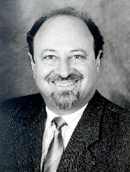 Dr. David Berliner is Regent’s Professor of Education, Arizona State University. He is an educational psychologist specializing in the study of classroom teaching, with interests in teacher education and educational policy. He has been president of both the American Educational Research Association and the American Psychological Association’s Division of Educational Psychology. Along with Sharon Nichols, he coauthored Collateral Damage: How High-Stakes Testing Corrupts America’s Schools. Berliner was a keynote speaker at the 2004 Alberta Initiative for School Improvement conference.
Also In the News