Jacqueline Louie
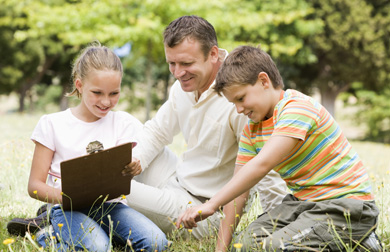 Helping young people understand the environment, the outdoors and their place in the natural world is what the Alberta Teachers’ Association’s Global, Environmental and Outdoor Education Council (GEOEC) is all about.
Calgary teacher and GEOEC President Rita Poruchny believes that through environmental and outdoor education Alberta students will become more environmentally literate, gain a deeper understanding of the natural world and a better understanding of how everything connects.
"Developing a love and passion for the outdoors is the first step towards creating an understanding of how the world works," says Poruchny. "When people don’t understand something," she adds, "they are much less likely to care about it."
Poruchny is concerned that many children do not really understand the natural world because they have few opportunities to experience it. "We know through studies that Canadian children are spending less and less time interacting with the environment outdoors."
Together with the Canadian Teachers’ Federation and an Ontario-based environmental movement called Green Street, GEOEC is developing a program to help teachers engage students in environmental issues.
"What we are hoping to do is to teach kids how to become more active, so that they learn that they have a voice and can make a difference," says Poruchny. "Often what we find is that kids care passionately about things, but are not really sure what to do with that caring."
Like Green Street, GEOEC encourages Alberta students to take personal responsibility for the environment and to make a commitment to sustainable living, environmental stewardship and social issues. Students are educated about some of the practical things they can do to improve their world (for example, how to start a petition and write effective letters).
GEOEC is working on recommendations to the Alberta government on a new science curriculum. Poruchny speaks positively about what the new curriculum will mean for young people across the province. "There are a lot of added initiatives that take kids outside—to look at environmental education by actually being in the environment," she says.
Finally, while organizations such as GEOEC do what they can to enhance education about the environment, science and the natural world, what really counts is what goes on at home. For instance, what do parents talk about with their children? What do they tell them is important? How do families spend time together? "It is so important for families to go outside and look at the natural world," Poruchny says. Without parental support, she explains, it is difficult for teachers to make a long-term difference in students’ lives. "We have many teachers in this province dedicated to providing quality environmental programs, but they are only as effective as the support they get from home."
Poruchny says it’s essential to help young people gain a greater understanding of Alberta’s wild spaces, so that they will come to know and care about the natural world. This is the best way, she adds, "to ensure that we have something left for the generations to come."
Also in the Learning Team
Student graduates from high school at age 64
The most important thing
Parent Tip
Understanding the natural world
We are committed to educating all children
Parents as advocates
Be the change!