Page Content
Alberta Education
Your child’s backpack should fit properly and shouldn’t be too heavy for him to carry. It shouldn’t be more than 10–15 per cent of his body weight and should have broad shoulder straps and a waist strap that keeps the bag firmly on the spine. Watch for warning signs that the bag may be too heavy to carry such as sore shoulders or changes in posture.
Studies show there has been a 30 per cent increase in back pain in young people since 1990. Doctors report seeing more school-aged children than ever before with shoulder, neck and back pain. These increases are partly due to kids carrying heavy or unbalanced backpacks.
Here are some tips that can help children develop good carrying habits that will protect them from future health problems.
All children should know the backpack basics: pick, pack, lift and carry.
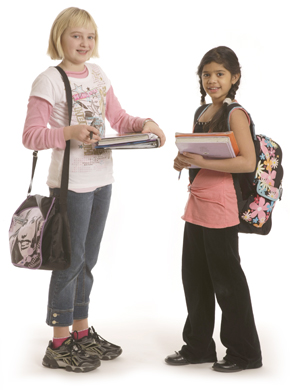
PICK the right pack
• Does it have a broad shoulder strap?
• Does it have a waist strap that keeps the pack firmly on the spine?
• Is the top of the bag at shoulder height and the bottom above the hollow of the back?
PACK only what you need
• A loaded backpack should not weigh more than 10 per cent of the user’s body weight.
• An 80-pound (36-kg) child should carry no more than three large books.
• Make sure the weight is evenly distributed.
LIFT your pack properly
• Bend the knees and grab the backpack with both hands.
• Use the leg muscles to lift the pack.
• Put on one shoulder strap then the other.
CARRY the pack correctly
• Don’t sling the pack on one shoulder.
• Use both shoulder straps and wear them snugly.
• Use the waist strap if you have one.
Also in the Learning Team