Page Content

Supports bring positive results and a bright future
According to the Statistics Canada report, The Girl Child (Hudon 2017), there are 3.4 million girls in Canada. Within this group, there exists a great deal of diversity. Census data from Statistics Canada (Hudon 2017) show that more than one million Canadian girls belong to a visible minority group or identify as Indigenous. However, even with so much variation within the Canadian and Albertan populations, some general observations can be made about the well-being of girls as they progress from kindergarten to Grade 12.
From 2009 to 2014, Alberta teachers assessed 86,564 kindergarten students using early development instruments (EDI), which measured five key areas of child development:
- Physical health and well-being
- Social competence
- Emotional maturity
- Language and thinking skills
- Communication skills and general knowledge
The purpose of the EDI was to help determine whether children were developing as expected by the time they entered kindergarten in order to craft thoughtful and supportive policy structures that would enable children to succeed in their early years. The Alberta government’s How Are Our Young Children Doing? Final Report of the Early Child Development Mapping Project (2014) found that “more girls tend to score highly on the EDI than boys. This holds true for all areas of development, although the difference between boys and girls is smaller in the area of language and thinking skills” (p 11). Given these findings, it seems reasonable to assume that, upon entry to school, girls are well-equipped to be successful as they grow into their adult lives.
However, girls’ pathway from childhood to adulthood is not linear. The Canadian Women’s Foundation fact sheet on the barriers girls face (2017a) reports that girls, while initially advantaged, lose ground to boys as they get older. This raises the question, what happens to girls as they enter adolescence and their teen years?
The fact sheet (2017a) points to three important factors contributing to challenges that girls experience as they grow up. First, compared to boys, girls experience higher rates of sexual violence and sexual harassment. It is difficult to know the true number of girls who experience sexual assault because it is estimated that only 10 per cent of sexual assaults are reported to police annually, but when girls are sexually assaulted, more than 88 per cent of the time the perpetrator is someone they know. The numbers are serious and also help to explain how girls become more vulnerable as they move into adulthood. Even though not all girls are victims of sexual violence and sexual harassment, they all know that it is a possibility for their own lives. Given this reality, it is incumbent on parents and teachers to work together to teach and model for all young people how to engage in healthy relationships including romantic relationships. In addition, it is important for all youth to understand issues of sexual health and consent, and schools and parents play an important role in providing this information to young people.
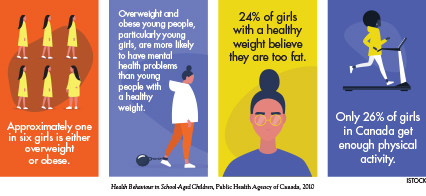
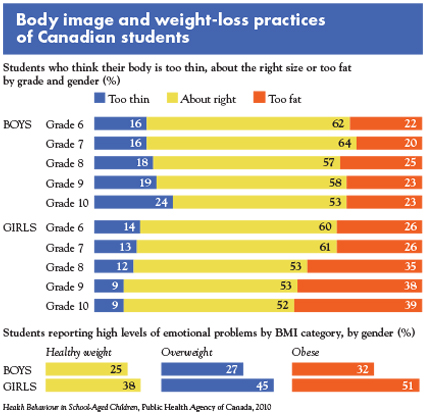
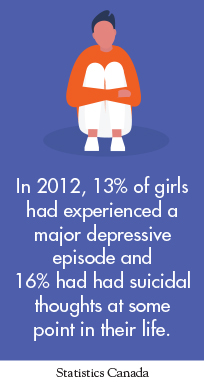
Second, more girls experience a sharp decline in mental health as they move into adulthood. As girls move from elementary school to high school, their confidence drops, they become more stressed and they experience depression at high rates (Hudon 2017; Public Health Agency of Canada 2008). For girls, some factors that contribute to a decline in mental health include the pressure to perform at school, impossibly high standards for body image, high rates of social media use, a lack of physical activity, bullying and cyberbullying. Parents and teachers can help raise the confidence and mental well-being of girls by ensuring that they feel a part of a community and that their presence in the world matters.
Finally, the third factor that harms the growth of girls as they move into adulthood is negative gender stereotyping. The research literature and data show that women do not have the same opportunities as men in terms of career progression. The numbers are daunting; for example, in Canada, the Canadian Women’s Foundation fact sheet on women in leadership (2017b) reports that women make up 19.5 per cent of the board members for Canada’s top 500 companies, and that only 8.5 per cent of the highest paid positions in Canada’s top 100 listed companies are held by women. In addition, women continue to carry the burden of domestic labour in higher proportions than men. Society has work to do to help create more equitable arrangements between men and women both at home and in the work force.
 Canadian girls are watching. The Girl Guides of Canada (2018) commissioned a survey to learn more about how young women experience gender stereotyping, and they found that “one in four (24%) girls aged 15 to 17 do not feel motivated to pursue their dream career because they are concerned they will be compensated less than their male counterparts” (p 7). Given the current gender wage gap, the girls participating in the Girl Guides survey are not wrong.
The picture for girls is not all doom and gloom. Steps can be taken to help girls meet their goals in life. At an individual level, parents and teachers can help girls succeed by providing encouragement and opportunities for involvement in clubs, programs for young women or sports teams. We can let girls know that it is alright to try something new, even if success is not immediate. At the structural level, we can help support policies and services that are specific for girls and women, including access to mental health support, health care and legislative structures that protect women’s and girls’ rights.
The future for Canadian girls remains bright. Our country and our province prioritize support for young people, and these supports include a vibrant public education system featuring excellent schools and successful partnerships between teachers and parents. Girls benefit from these supports, which help them to grow into healthy, confident and resilient adults.
References
Canadian Women's Foundation. 2017a. Fact Sheet: Moving Girls into Confidence. Canadian Women's Foundation website. https://canadianwomen.org/wp-content/uploads/2017/09/Facts-About-Girls.pdf (accessed March 7, 2020).
———. 2017b. Fact Sheet: Moving Women into Leadership. Canadian Women's Foundation website. https://canadianwomen.org/wp-content/uploads/2017/09/Facts-About-Women-and-Leadership.pdf (accessed March 7, 2020).
Girl Guides of Canada. 2018. Sexism, Feminism & Equality: What Teens in Canada Really Think. Girl Guides of Canada website. www.girlguides.ca/WEB/Documents/GGC/media/thought-leadership/201SexismFeminismEquality-WhatTeensinCanadaReallyThink.pdf (accessed March 7, 2020).
Government of Alberta. 2014. How Are Our Young Children Doing? Final Report of the Early Child Development Mapping Project (ECMap). Government of Alberta website. https://open.alberta.ca/publications/6985264 (accessed March 7, 2020).
Hudon, T. 2017. The Girl Child. Statistics Canada website. https://www150.statcan.gc.ca/n1/en/pub/89-503-x/2015001/article/14680-eng.pdf (accessed March 7, 2020).
Public Health Agency of Canada. 2008. Healthy Settings for Young People in Canada. Government of Canada website. www.canada.ca/content/dam/phac-aspc/migration/phac-aspc/hp-ps/dca-dea/publications/yjc/pdf/youth-jeunes-eng.pdf (accessed March 7, 2020).