Page Content
Adolescence is a time of dramatic physical, emotional, intellectual and social change. Young people often feel tremendous pressure to succeed at school, at home and in social groups.
A student’s support system consists of his or her family, friends and other significant people, such as teachers. And because teachers play an influential role in students’ lives, it is important that they understand children’s mental health.
Good mental health is more than just the absence of mental illness. Good mental health allows a person to flourish and fully enjoy life. Most adults learn to manage the ups and downs of life and to cope with life’s less-positive experiences, whereas children and adolescents are still developing their coping skills and need additional support through the tough times.
Most people will experience mental health problems over the course of a lifetime; feeling like one is “going crazy” is often a normal reaction when a person is stressed out, confused or upset. Most often such feelings pass and do not require medical treatment. Nevertheless, these feelings have a real effect on a person’s mental health and ability to thrive and enjoy life. People experiencing mental health problems benefit from help, support and understanding.
Mental illnesses—such as schizophrenia, depression, bipolar disorder, obsessive compulsive disorder and eating disorders—usually require medical treatment. It is estimated that one in five Canadians will experience a diagnosable mental illness at some point.
It is important to pay attention to unusual behaviour in your students. Changes in thoughts, moods, feelings, behaviour and perceptions are part of life. But persistent or severe changes (for example, drastic and sustained loss of interest in things one normally enjoys, or a significant and continual drop in performance at school) may be signs of trouble and possibly of mental illness, which, if left untreated, could be harmful.
Changes in mood or behaviour that are troubling or that persist beyond two weeks should prompt an evaluation by a doctor. A family doctor can determine if the changes are physical or mental in nature and, if required, refer the patient to a mental health professional.
Factors influencing student mental health
Self-esteem—Self-esteem is the value we place on ourselves. People with good self-esteem generally have a positive outlook and are satisfied with themselves most of the time.
Feeling loved—Children who feel loved, trusted and accepted by their parents and others are more likely to have good self-esteem. They are also more likely to feel comfortable, safe and secure, and are better able to communicate with others and develop positive relationships.
Confidence—Youths should be encouraged to discover their own unique qualities and have the confidence to face challenges and take risks. Young people who are brought up to have faith in themselves are more likely to have a positive attitude and to live a happy and productive life through adulthood.
Family breakup or loss—Separation or divorce, or loss of a parent or sibling, are among the most painful events anyone can experience, and they are especially difficult for children. Finding ways to cope and adjust is critical for all ages, but particularly for youths, who do not have much life experience. The manner in which breakup or loss is handled can negatively influence young people for years to come. Children who are having difficulty coping should obtain professional help.
Physical ill health—Diseases, injuries and other physical problems often contribute to poor mental health and sometimes mental illness. Some physical causes, such as birth trauma, brain injury or drug abuse, can directly affect brain chemistry and contribute directly to mental illness. More commonly, poor physical health can have an impact on self-esteem and the ability to meet one’s goals and, consequently, can lead to unhappiness or even depression.
Abuse—Abused children are at far greater risk of mental health problems than are children who are free from abuse. They are more likely to experience mental disorders or mental illness during childhood and adulthood. Abuse takes many forms—it can be experienced first-hand or through observing the abuse of others. Abuse can cause feelings of low self-esteem, lack of self-confidence, depression, isolation and anger—all feelings that impair one’s chances of leading a happy life.
Teachers partnering with mental health association
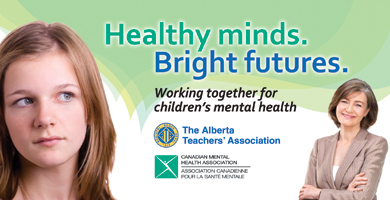
The Alberta Teachers’ Association is partnering with the Canadian Mental Health Association (CMHA) to promote the positive mental health of children and youth in an initiative entitled Healthy Minds. Bright Futures. The project aims to increase awareness about the mental health needs of children and to decrease the stigmatization often associated with mental illness.
As part of the program, the ATA and the CMHA are producing the booklet Compassionate Classrooms to help teachers understand student mental health and to provide them with a resource when they are confronted with students’ mental health issues. Booklets will be distributed to teachers in early May.
Do you have a story about mental health?
Do you have a story to tell about how student mental health has impacted you? If so, please contact Jonathan Teghtmeyer, ATA executive staff. E-mail: jonathan.teghtmeyer@ata.ab.ca; telephone: 780-447-9477 (Edmonton and area) or 1-800-232-7208 (toll free in Alberta).
Also in the Learning Team